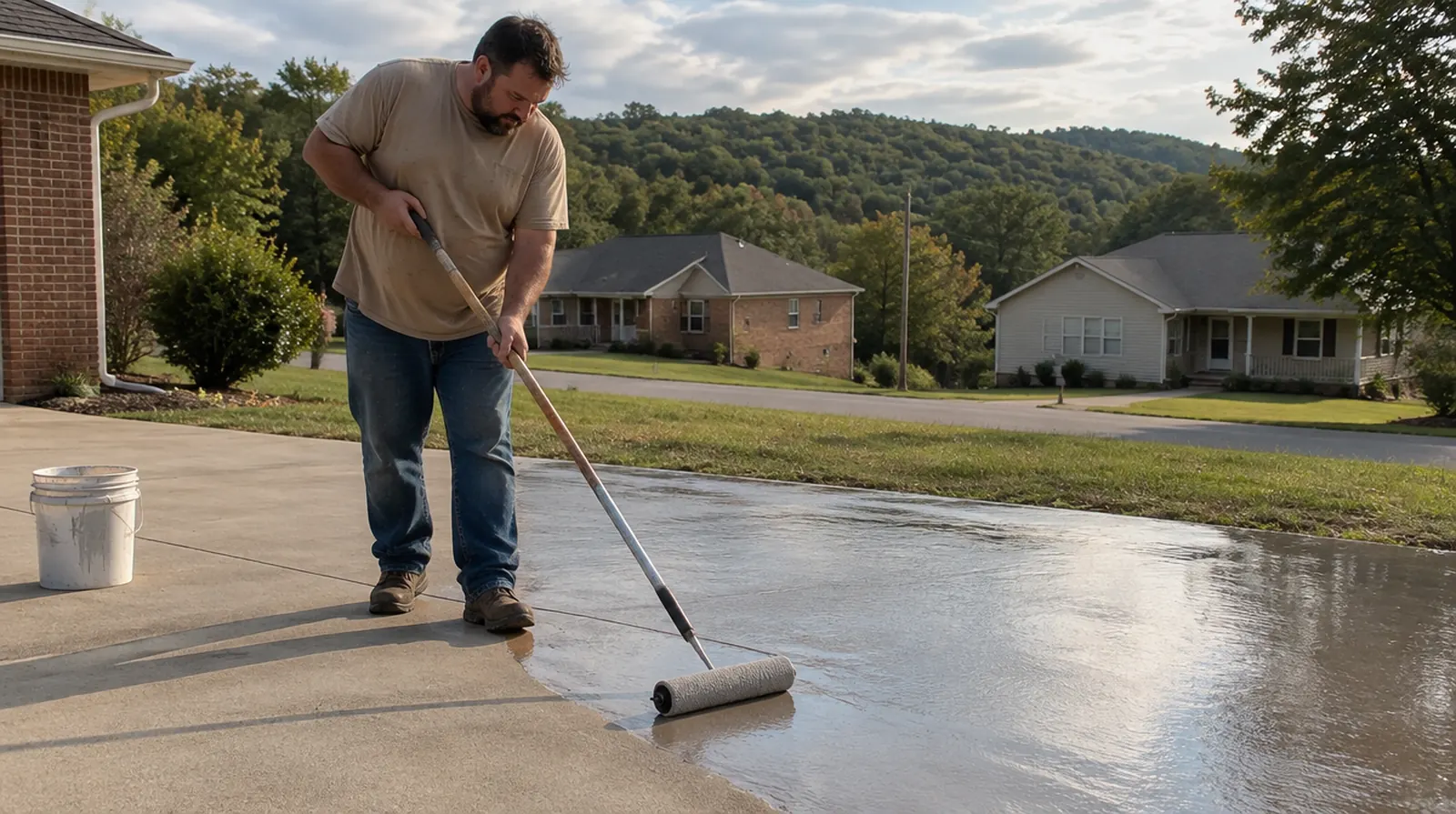
What it protects against
Rain soaking in, oil drips, red clay staining and the surface flaking that happens when wet concrete freezes on a cold night.
Two kinds
Penetrating sealers soak in and leave the surface looking natural. Topical sealers form a thin film, add a little sheen and make color look richer.
Common jobs
Driveways, sidewalks, back patios, shop aprons and the pad in front of a metal building.
Getting it right
We clean, degrease and let the slab dry before sealing. Sealing over dirt just locks it in.
For a finished indoor floor, see epoxy coatings.
Casino-area businesses and rentals
Parking pads, sidewalks and walkways at businesses and rental properties around Pocola see a lot of foot traffic and weather. Sealing helps them look cleaner and hold up through winter without extra upkeep.
Shade and moss
Concrete under trees or on the north side of a building can stay damp and grow moss or mildew. Cleaning and sealing helps it dry out faster and look better.
Sealing questions from Pocola homeowners
Should I seal a brand-new driveway? Yes, once it cures. Sealing early keeps clay and oil from setting in.
Will it stop ice damage? It reduces how much water soaks into the slab, which is the main cause of winter flaking.
Can you seal the slab under a carport or RV cover? Yes, and covered slabs hold sealer longer.
How often? Every few years for most exposed concrete.
Eastern Oklahoma's mix of storms, humidity and winter ice is hard on bare concrete. Concrete sealing in Pocola protects driveways, walks, patios and shop aprons. We wash, treat stains and let the slab dry fully before applying sealer, and we time the job between storm fronts in spring or fall.
What we clean before sealing
Red clay, oil drips, mildew in shaded corners and leaf stains all get treated first. We pressure wash, degrease and scrub, then wait for the concrete to dry fully. Sealing over dirt or damp concrete leaves a cloudy, uneven finish, so we never skip the wait, even when the forecast looks clear.
We also seal shop aprons and turnarounds where trucks and trailers park.
Best season
Spring and fall, during dry spells between fronts.
Sealer choice
Penetrating for exposed slabs, film for covered patios.
Sealing barn aprons and patios
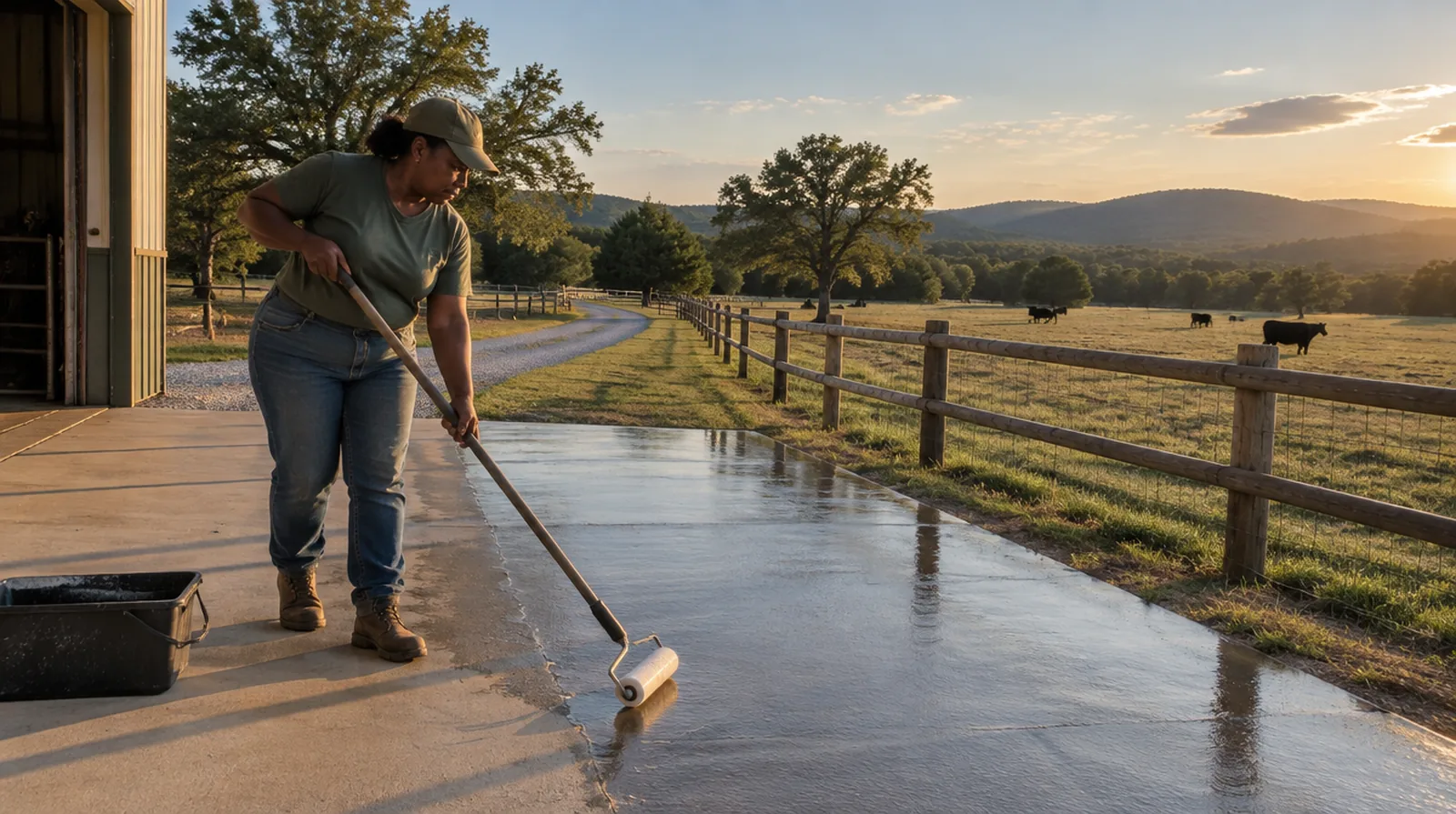
Rural properties around Pocola have a lot of outdoor concrete beyond the driveway. Barn aprons, feed pads, porches and patios all take rain, manure, fertilizer and the sun. Rolling on a sealer helps the concrete repel water and resist stains. The photo shows a worker rolling a clear sealer on a barn apron next to a pasture fence. It is simple work, but timing and surface prep make the difference between a sealer that lasts and one that peels.
Prep makes the sealer stick
Before sealing, we power wash the surface, scrub out oil or rust stains and let it dry fully. Mud, moss and loose concrete all need to come off, or the sealer will lock them in. On older concrete with lots of small cracks, we fill the larger ones first.
How often to reseal in Le Flore County
Sun, heavy spring rain and freeze cycles all wear down sealers. Penetrating sealers last several years on a driveway. Film-forming sealers on patios and walkways may need a fresh coat sooner, especially where they see a lot of foot traffic. Water beading on the surface is a good sign the sealer is still working.
Porches, steps and walkways
Front porches and steps are often the first concrete guests see, and they collect red mud from shoes. A sealer makes that dirt rinse off with a hose instead of staining the surface. On steps, we add a fine grit so they stay safe in rain. Back patios under shade trees benefit too, since sealed concrete is less likely to grow green film in damp corners.
Sealing questions
Can you seal stamped concrete? Yes. We use a sealer that brings out the color and protects the pattern.
Will sealer make my driveway slick? Penetrating sealers keep the texture. On glossy sealers, we can add grit.
Get a sealing quote
Call (918) 303-0129.