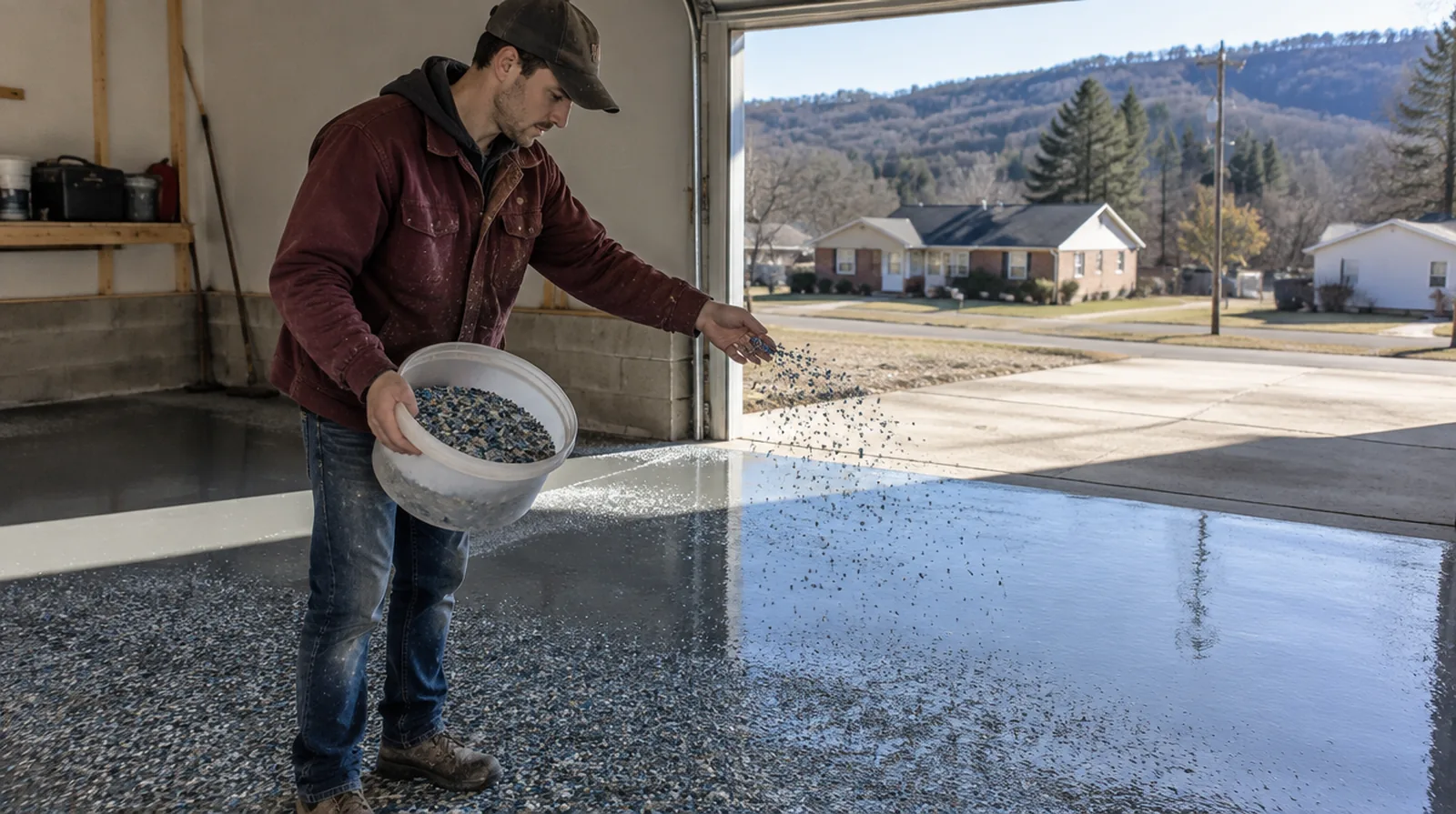
A pattern that hides things
Thousands of small vinyl chips in two or three colors break up the surface so dust, footprints and the odd smudge of red clay blend in. You still clean it, but it looks good a lot longer between cleanings.
How we lay it down
Grinding and primer come first, as always. Then we roll a tinted base coat and throw chips by hand across the whole floor until no base shows. Once cured, the loose chips get scraped and vacuumed away, and a clear coat locks everything in.
Choosing your chips
Rust, tan and brown mixes hide local dirt best. Gray and black look sharp in a shop. We bring a few sample boards so you can see them in your own light.
Places it works
Garages, carports with a UV-stable top, shops, laundry rooms and enclosed porches.
If you want something sleek instead, look at metallic floors.
Enclosed porches
Screened and enclosed porches are a nice spot for flake. It holds up to boots and pets and hoses off easily.
Flake questions
Will red clay stain a flake floor? Not if it is rinsed off. Mid-tone blends hide it between washes.
Can flake go on a porch or breezeway? Yes, in covered areas with a UV-stable top and some grit.
Is it good for a shop with living quarters? Yes, and the smoother finish suits the living side.
How long does it take? One to two days for most garages.
A flake floor in Pocola holds up to work boots, trailer hitches and wet dogs, and it cleans with a hose. For homes with metal shop buildings, we often coat the house garage in flake and polish or seal the shop. Mixing systems this way puts the money where it does the most good.
How we install flake
We grind, fill cracks, roll a base coat and broadcast chips by hand until the base disappears. After cure we scrape off loose chips, vacuum and apply a clear top. For hard-working garages we add a second clear coat. Earth-tone and gray blends hide red dirt best, and we bring large boards so you can compare in your own light.
Upkeep
Sweep and hose down as needed. Skip harsh degreasers on the clear top.
Chip size
Quarter-inch suits most garages; smaller chips look finer.
Rolling the clear coat over a full broadcast
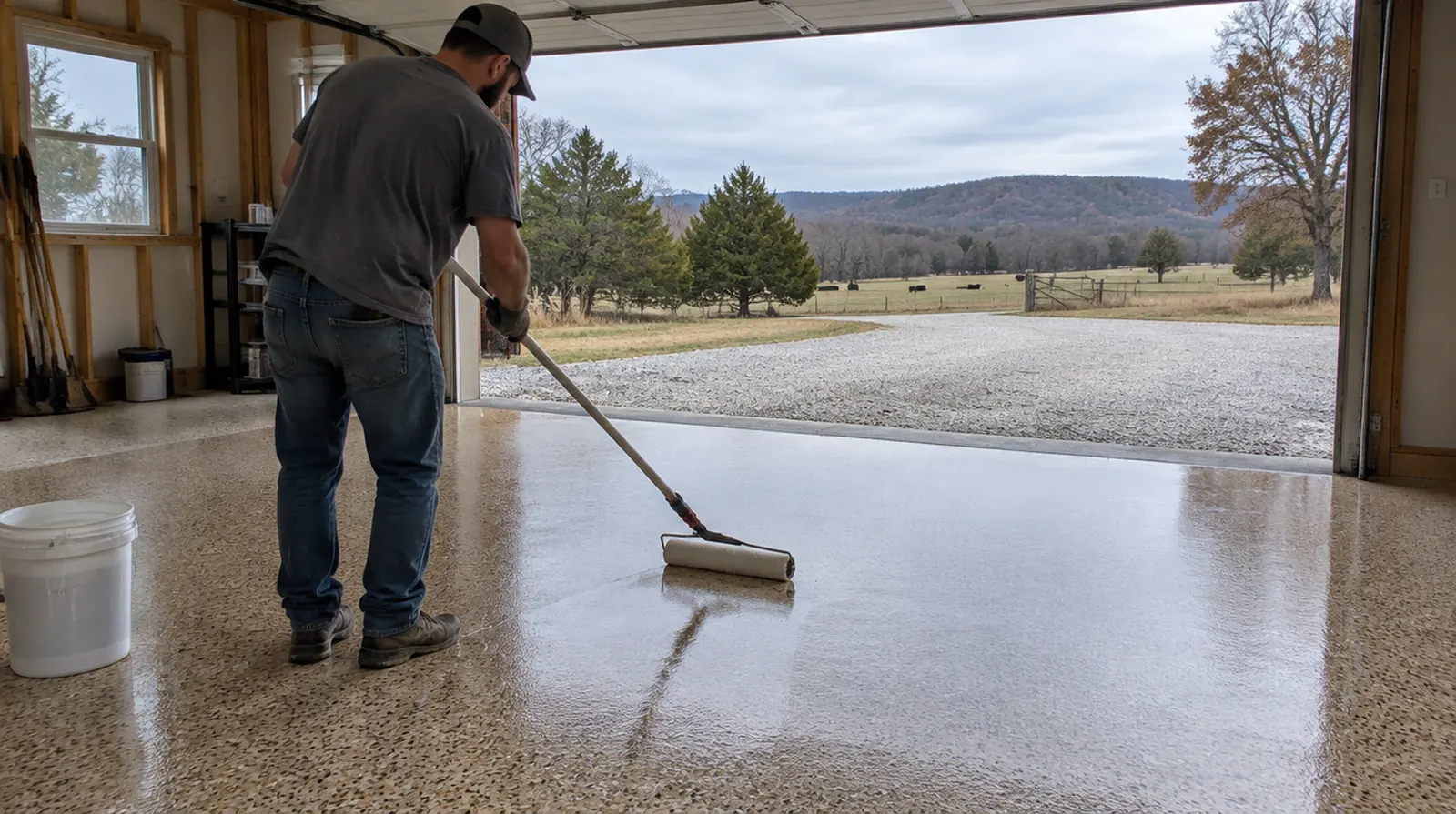
After the chips have soaked into the base coat and cured, the floor feels rough, almost like sandpaper. We scrape off the high points, vacuum up every loose flake and then back-roll a clear top coat across the whole surface. That last layer seals the chips in, smooths out the texture and gives the floor its sheen. The photo shows a tan and brown blend in a detached garage getting that final coat.
Picking chip size and color
Chips come in several sizes. Larger chips give a bold, speckled look that works well in big shop buildings. Smaller chips make a tighter, more uniform pattern that suits house garages and laundry rooms. Color blends range from light grays to dark earthy browns. People out on county roads with gravel drives often choose blends with rust, tan and brown so the red dirt that blows in does not stand out.
Grip without being rough on knees
A chip floor already has some texture, but if you work on your knees under vehicles, you may want it a little smoother. We can adjust how heavily we sand the chips and how thick we lay the top coat. If you need more grip near the door where rain blows in, we add a fine aggregate to that area only.
Laundry rooms and breezeways
Chip floors also work in laundry rooms, breezeways and covered porches where concrete gets wet feet and spilled detergent. The texture keeps them safer when damp.
Flake questions
Will the chips fade in the sun? Chips near an open door can fade if the top coat is not UV stable, so we use a UV stable clear coat on floors that see sun.
Can a chip floor go in a mudroom? Yes. It is one of the best floors for a room where boots come off.
See chip samples
Call (918) 303-0129.