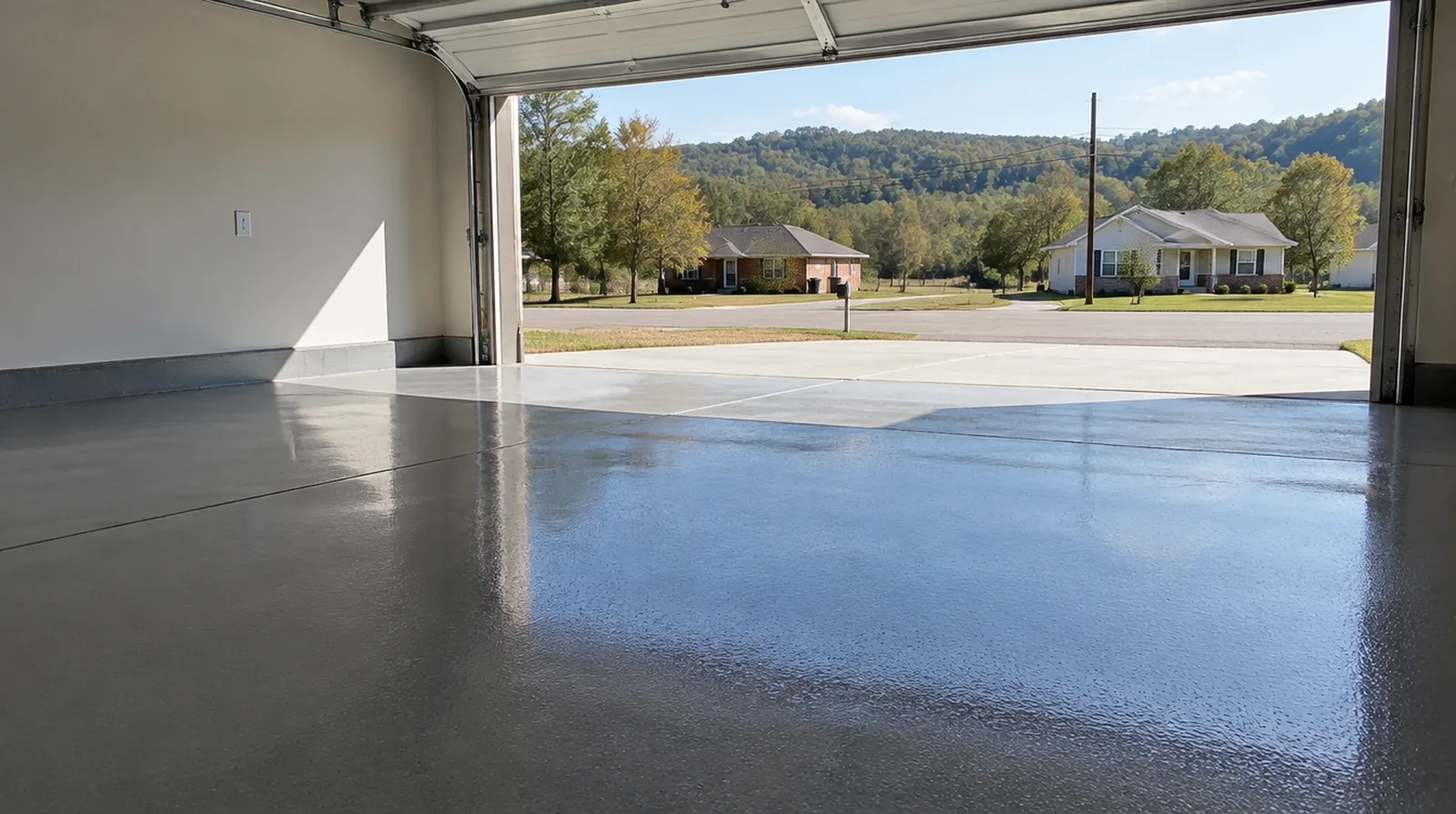
Start with the concrete
Clay soil movement leaves a lot of local slabs cracked. Before any coating, we grind the floor with diamond tooling, chase out each crack, and fill it with a repair material that we then grind flush. That way the cracks do not show up as ridges under the new floor.
Layers that do different jobs
The primer soaks deep into the concrete and gives everything above it something to grip. The body coat brings the color and the thickness. A chip broadcast can go into that layer for texture. The clear top coat is what you walk and drive on, and it is what makes the floor easy to clean.
Red dirt days
After a rainy week, a truck can drag in a lot of orange mud. On a coated floor, a hose and a push broom get it out the door. On raw concrete, it leaves a stain that never fully goes away.
Time to plan for
Most garages take two days, with walking the next morning and driving a few days later. If that is too long, a polyaspartic top can shorten it.
Garage questions we hear in Pocola
Can you coat a garage with a sloped floor and a drain? Yes. The coating follows the slope, and we finish neatly at the drain.
Will hot tires lift it? Not with a properly ground and built system.
Can I park a loaded trailer? Yes, with a pad under the jack.
Do you coat stem walls? Often, a few inches up, so dirt and water do not collect at the edge.
Garage floor epoxy in Pocola is built in layers: ground concrete, filled cracks, primer, a color or flake body coat and a clear top. Most garages take one to two days. We give you written times for walking, moving things back and parking, and we leave care instructions for red dirt season.
Price factors
Size, slab condition, the amount of crack repair and the system you choose set the price. A detached garage may need a generator if power is not available. We spell it all out in writing.
Cabinets go in last
Install cabinets after the floor cures for a clean look.
Grip near the door
We add texture where wet tires roll in.
Grinding out years of oil stains
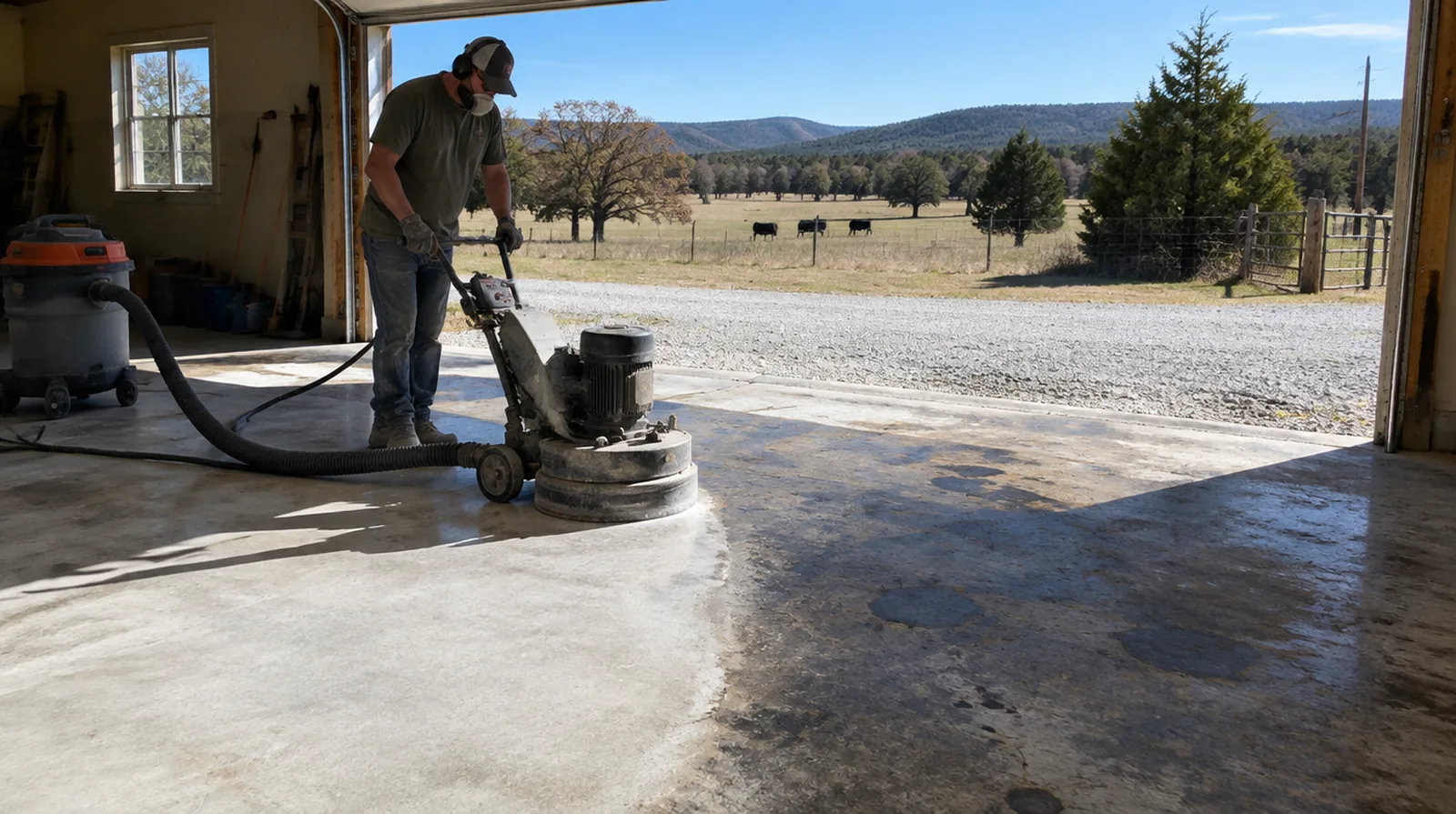
Garages that have held work trucks for a decade usually have a dark patch where the engine sat. Oil soaks deep into raw concrete, and a coating will not bond to it. We grind the stained area with a diamond grinder hooked to a vacuum, scrub it with a degreaser, and grind again until clean concrete shows. In the photo you can see the difference between the ground half of a slab and the side still waiting for prep. That color change is what we are looking for before any coating goes down.
Fixing cracks from shifting clay
Red clay soil in Le Flore County swells when it is wet and shrinks during dry summers, and garage slabs crack as the ground moves. We open each crack with a saw or grinder, vacuum it out and fill it with a repair material that bonds to the concrete. Moving joints, such as the cut lines a concrete crew put in on purpose, get a flexible filler so they can still move without splitting the new coating.
Choosing between solid color and chips
A solid color epoxy floor looks clean and bright, but it shows dust and tire marks more. A chip floor hides those well and has more grip. Most Pocola families choose chips for a working garage and save solid color for a workshop corner or a hobby room. We can also combine the two, with a solid color border and a chip field in the middle.
Garage floor questions
How long before I can drive on it? We give you a written time based on the system and the weather. It is usually several days for full vehicle weight.
Will road salt hurt it? Not much salt is used around here, but the coating handles it. Just rinse the floor when you see a white film near the tires.
Get a garage floor price
Call (918) 303-0129.