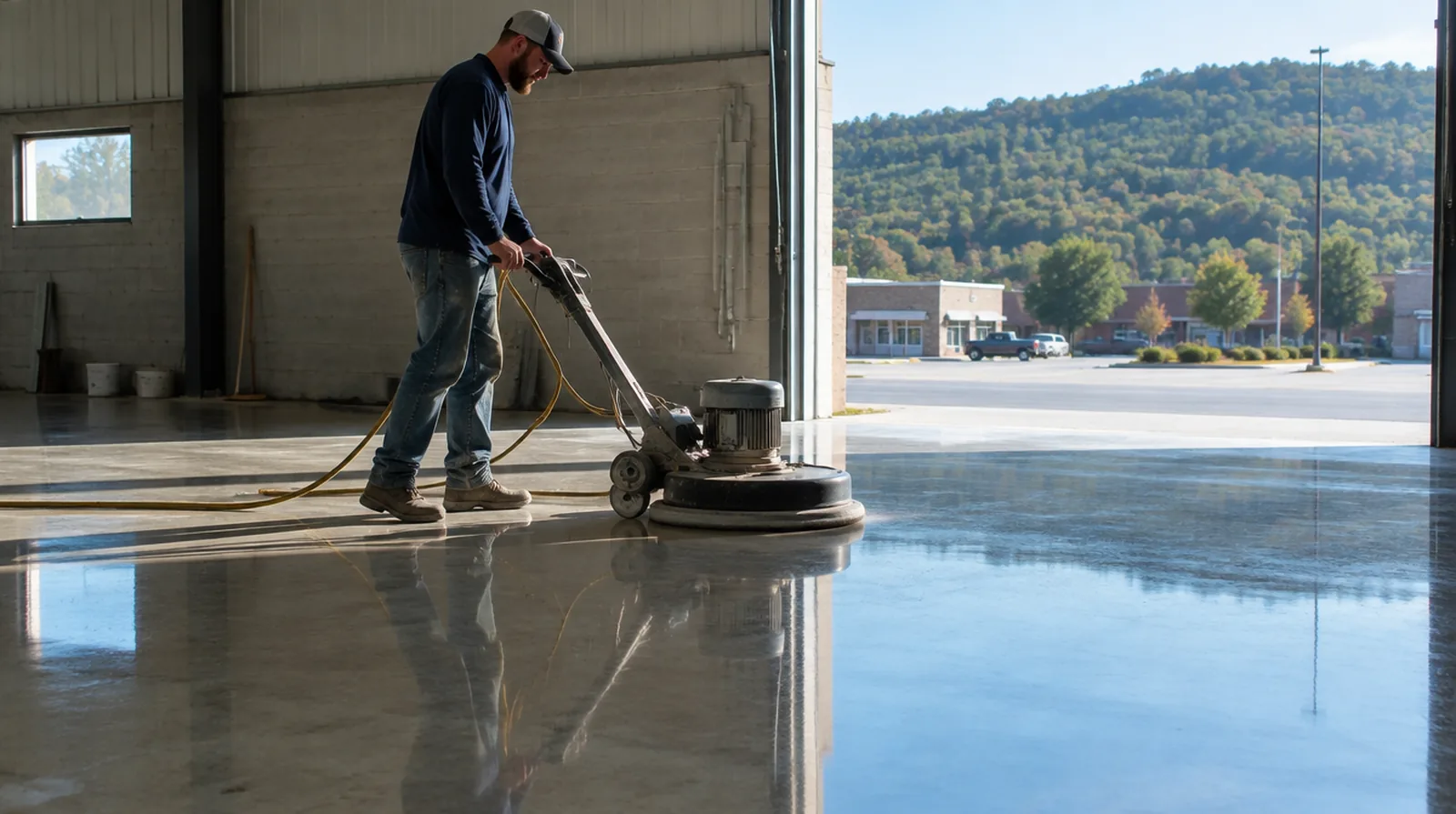
The steps
We grind with coarse diamonds to cut the surface flat, then treat it with a liquid densifier that soaks in and hardens the top of the slab. Then we keep polishing with finer and finer pads until it shines.
Where it makes sense
Offices, stores, and homes with a modern look, as long as the slab is in good shape.
Where it does not
Clay-cracked or heavily patched floors will show every flaw. For those, a coating gives a more even result.
Living with it
Sweep, damp mop with a neutral cleaner, and buff now and then. Nothing to peel, nothing to recoat.
Shops with living quarters
Some metal buildings in the area have a shop on one side and an apartment or office on the other. Polishing the living side gives a clean, modern floor that matches the building, while the shop side gets a tough coating.
Questions about polishing
Can a barndominium slab be polished? Often yes, and the best time is before interior walls and cabinets go in.
Is it slippery? When dry, similar to sealed concrete. Matte finishes and mats help near doors.
Will old stains show? Some grind out; deep ones may remain.
How long does it last? Many years with simple care and an occasional burnish.
Polished concrete in Pocola suits metal shop buildings, warehouses and modern homes. We grind with coarse diamonds, fill cracks, apply a densifier and refine with finer pads to the sheen you choose, then add a guard sealer. Vacuums capture the dust throughout.
Where it does not fit
Polished concrete is not a good choice for floors that see heavy chemicals, oil or constant water, or for slabs with lots of patches that you do not want to see. In those cases, a coating serves better. We walk the space and tell you honestly which option fits before you spend anything. For shops, a satin polish hides tire marks and sweeps easily, and walk-off mats at doors keep red dirt from dulling the shine.
Timeline
Most spaces take two to four days, depending on size and finish level.
Daily care
Dust-mop and wash with a neutral cleaner. A burnish every year or two restores the gloss in high-traffic paths.
Shop living quarters
On the living side of a shop home, polish feels clean and modern.
Polished floors for farm and feed offices
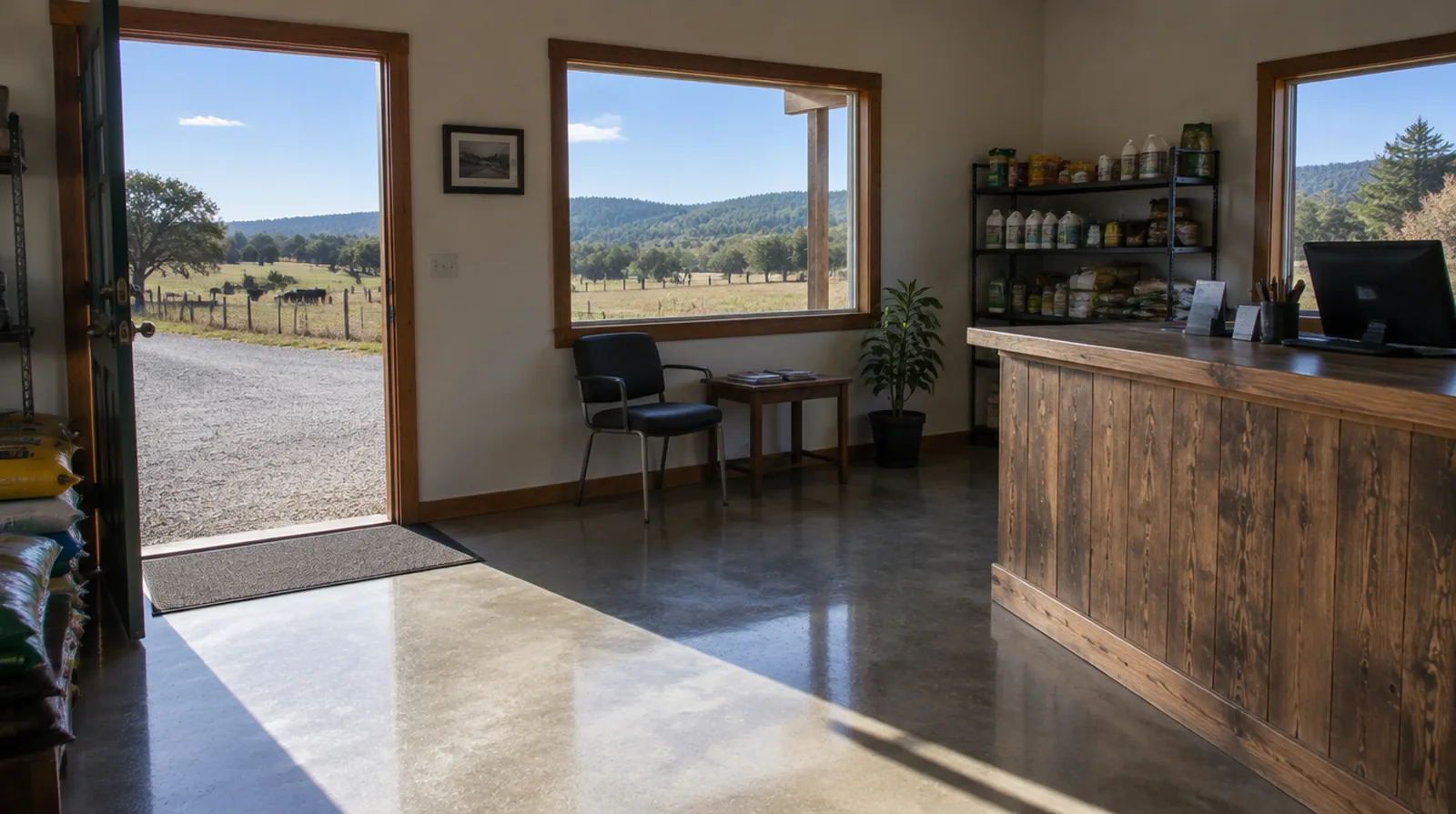
Feed stores, farm supply businesses and small rural offices often have a plain concrete slab under the counters and shelves. Polishing that slab gives a clean, durable floor that handles muddy boots, dropped feed bags and pallet jacks. In the photo, a small farm supply office has a polished floor with a soft sheen, wood trim and a window looking out at the hills. The floor needs no wax and stands up to daily traffic.
The grinding process step by step
We begin with coarse diamond tooling to remove old coatings and surface stains. Then we work through finer and finer grits. A liquid densifier soaks into the concrete midway through and hardens the surface. Higher grits bring out the shine, and a final guard coat helps resist stains. The whole job can take a few days, depending on the size and condition of the floor.
When a coated floor is a better fit
Polished concrete is great for dry, steady traffic. In a garage or shop where oil drips or chemicals spill, an epoxy or polyaspartic coating protects the slab better. If your floor has heavy cracks or uneven sections, it may need repairs that will show through a polish.
Polishing a shop apartment floor
Some owners build a small apartment or office into the end of a metal shop. Polishing the slab in that space gives a finished floor without adding tile or carpet over concrete that already looks good. It also keeps the room easy to clean when people come in from the shop side.
Polished concrete questions
Will polishing remove old stains? Grinding takes off a lot of surface staining, but deep stains may still show.
How much maintenance does it need? Dust mop it regularly and use a neutral cleaner. Reapply the guard every so often in busy areas.
Ask if your slab will polish
Call (918) 303-0129.