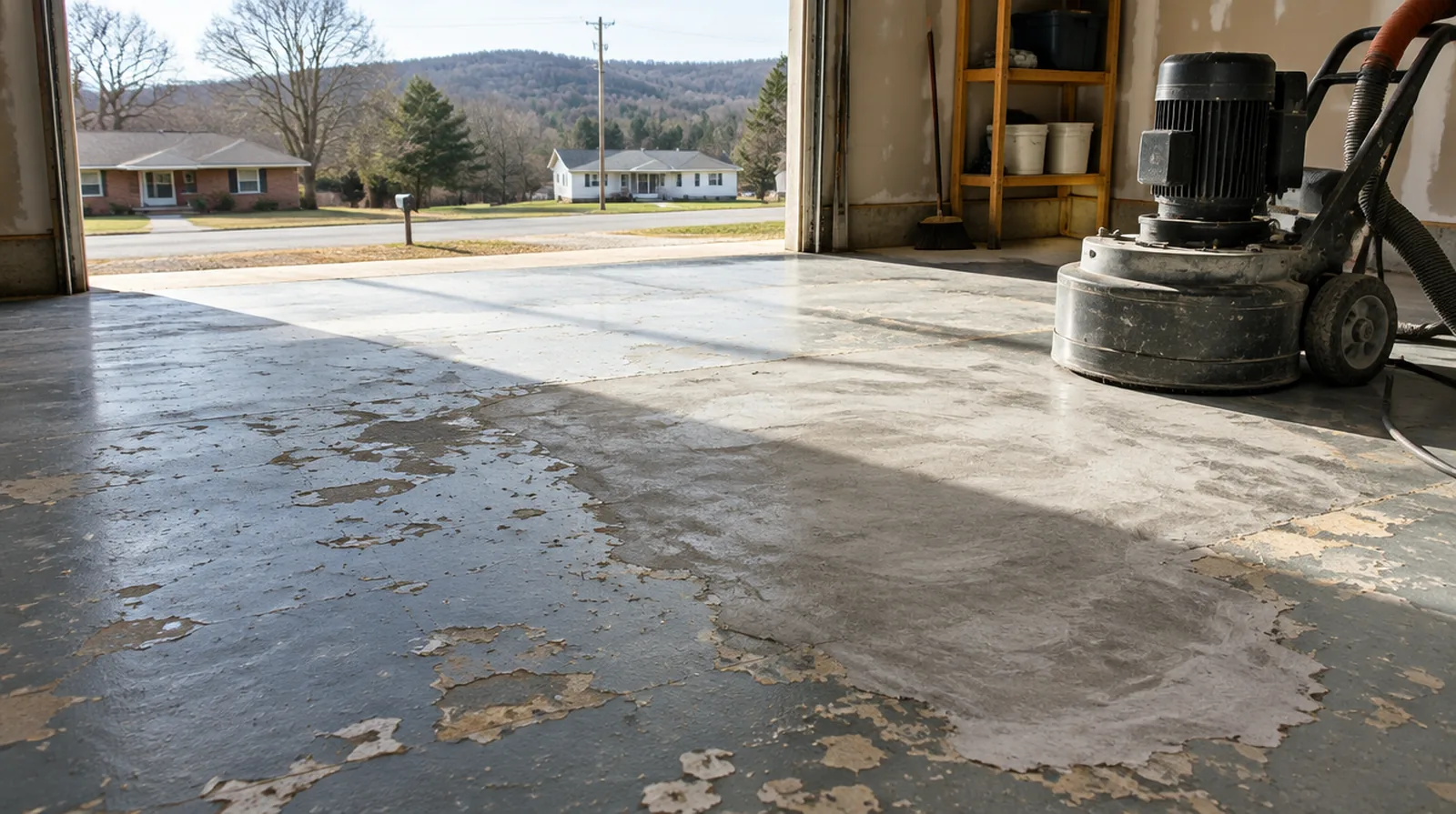
The usual suspects
- A store kit rolled over concrete that was only washed
- Moisture rising through a slab with no barrier
- A top coat too thin for truck traffic
- Sun yellowing an epoxy top in a carport
How we redo it
We grind the old coating off down to bare, sound concrete. Then we test moisture, choose a primer to match, and build a full system back up.
Patching
Sometimes a dropped tool or a chemical spill damages one spot on a good floor. That can be cut out and blended. Widespread peeling cannot.
Read about our full garage system.
Trucks and hot tires
Hot tires off the highway are the classic cause of peeling on kit floors. When we rebuild, the ground-in primer and thicker top keep that from happening again.
What usually goes wrong, and how we fix it
Epoxy floor repair in Pocola usually starts with one of three problems: a store-bought kit peeling under tires, a coating blistering because the slab was damp when it went down, or chips and gouges from trailers and equipment. Each has a different fix.
Peeling kits
Thin roll-on kits rarely bond well because the concrete was not ground. We grind them off and install a real system.
Moisture blisters
We test the slab, grind out blistered areas and rebuild with a primer made for higher moisture.
Impact damage
Chips and gouges get cut back, filled and rebuilt. On flake floors the patch blends well.
Repair questions
How long does a repair take? A day or two.
Can I change colors? With a full recoat.
Is a full redo better? If the coating is lifting in many places, yes.
Preventing future damage
Use a pad under trailer jacks and jack stands, rinse clay and salt off the floor regularly and wipe fluid spills quickly. A fresh clear coat every several years on a busy garage floor keeps the surface tough and glossy, and it costs far less than a full redo.
Signs to watch
Lifted edges at the door, bubbles, white haze and peeling at the tire paths. Each spreads over time, so call early and send a photo.
Color matching
Flake repairs blend well; a full clear coat ties old and new together.
Patching chipped and spalled concrete
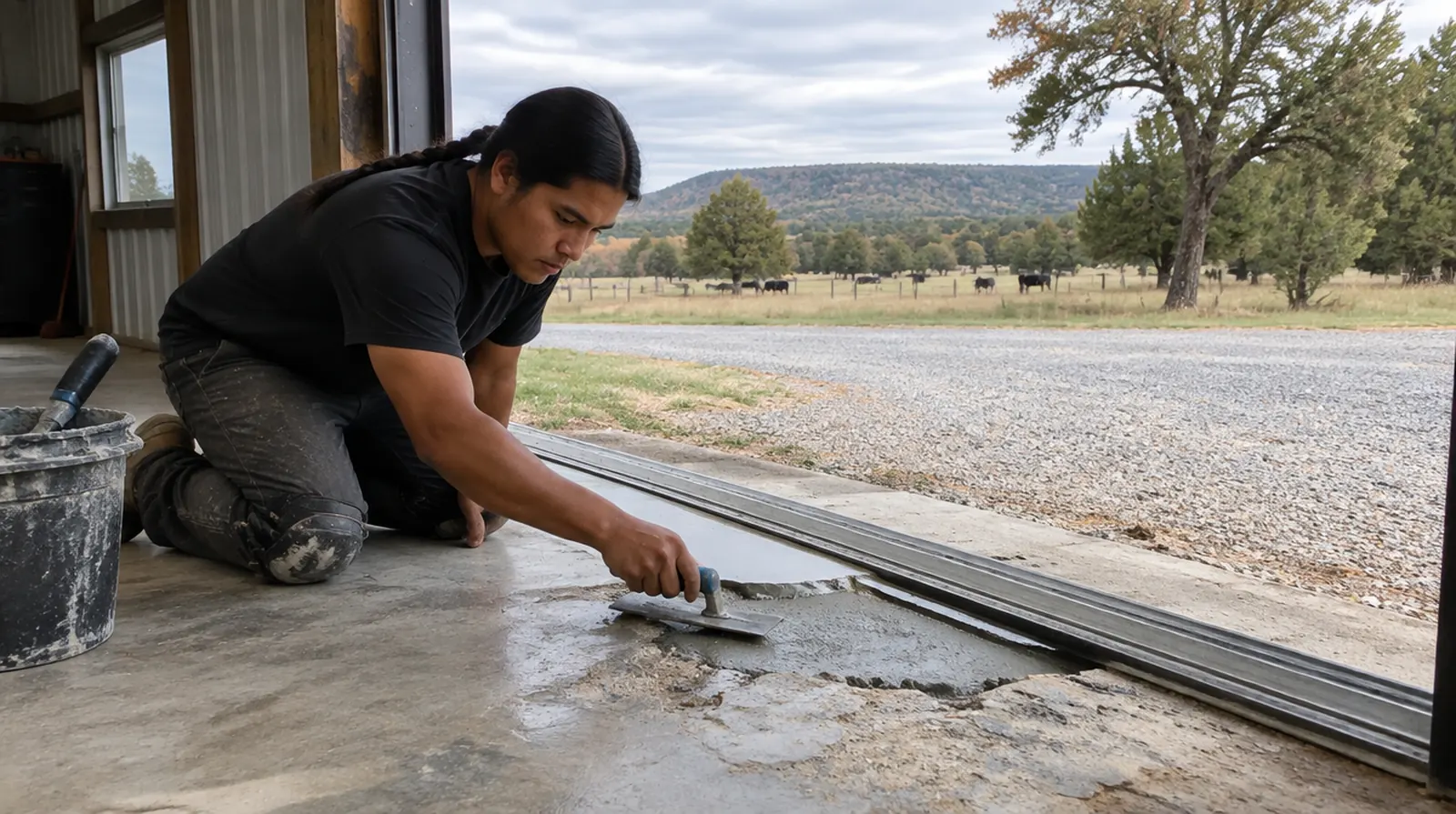
Shop floors near the door track take a lot of punishment. Freeze and thaw, heavy equipment and water running in under the door can break off chunks of concrete, leaving rough spalled spots. Before we coat or recoat, we chisel out loose material, clean it and fill the area with an epoxy mortar that hardens stronger than the concrete around it. The photo shows one of those patches going in. Once it cures, we grind it flush so the coating goes over a flat surface.
Figuring out why a coating failed
We see a lot of failed store-bought kits in Pocola garages, plus some professionally installed floors that peeled because the slab was not ground or was too damp. We test adhesion, check moisture and look at where the coating is lifting. Peeling under tires usually means the surface was never ground. Bubbling or white haze underneath often means moisture.
Repair or start over
If most of the floor is solid, we can repair small sections and blend them in. If the coating is lifting across the floor, the best long-term answer is to grind it all off and put down a new system. We will show you what we found and explain the choice before you decide.
Keeping the next floor from failing
After a repair, a good door seal, a mat at the house step and quick cleanup of fuel or brake fluid go a long way. If water runs in under the door during storms, a small threshold or a regraded apron outside can keep it off the floor.
Repair questions
Can you match my existing chip blend? We try, but older floors fade, so repairs may be a bit noticeable at first.
Is spalled concrete a structural problem? Usually not. Most spalling is surface damage we can fill and coat.
Get your floor looked at
Call (918) 303-0129.