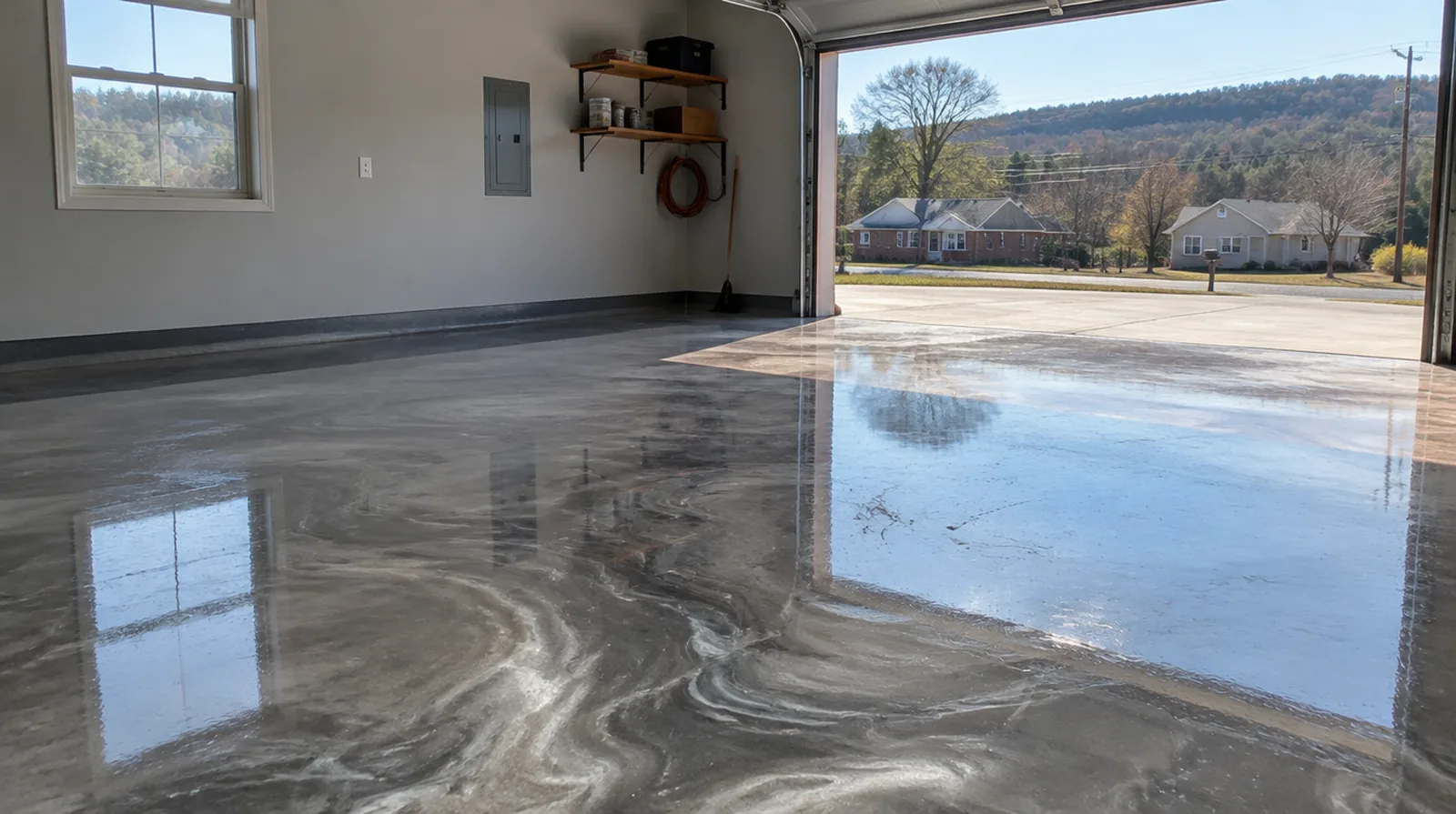
Not for every room
In a working garage or shop, metallic will show scratches. It is at its best in a man cave, a home office, a salon or a small store where people notice the floor.
How it is poured
We prep and prime like any job, then pour clear epoxy mixed with metallic powders. While it is still wet, we push and pull the material with rollers and brushes. The final look is set in that short window, and no two floors match.
Protecting it
A clear top over the metallic layer helps, and a polyaspartic top is harder still. Felt pads under chairs and a mat at the door go a long way.
How long it takes
Plan on two to three days, plus a few more before heavy furniture goes back.
Home bars and game rooms
A metallic floor is a popular pick for a game room or a home bar built into part of a garage or a shop. It looks custom, and spills wipe right up.
Where metallic fits in Pocola
Metallic epoxy is a decorative floor best suited to indoor spaces: home bars, game rooms, the living quarters of a shop home (often called a barndominium), offices and salons. It is poured and worked by hand, so each floor is one of a kind.
Metallic questions
Is it practical for a barndominium? Yes, on the living side. We often recommend flake or polish in the shop side.
Can you add grit? Yes, to the topcoat for better footing.
What colors work? Silvers and charcoal for modern spaces, coppers and bronzes for warmth.
How do I keep it looking good? Felt pads, a dust mop and a mild cleaner.
Expect three to four days for the full install, and keep pets out until it cures.
Getting the slab ready
Metallic finishes show every flaw, so we grind flat, fill cracks and holes and sometimes add a leveling coat before the pour. In new barndominiums we test moisture first, since fresh slabs can still be releasing water.
Satin or high gloss
High gloss shows the most depth; satin hides scratches and dust better in busy rooms.
Sample boards
We bring poured samples so you can see real colors in your room before choosing.
A metallic floor in a farmhouse game room
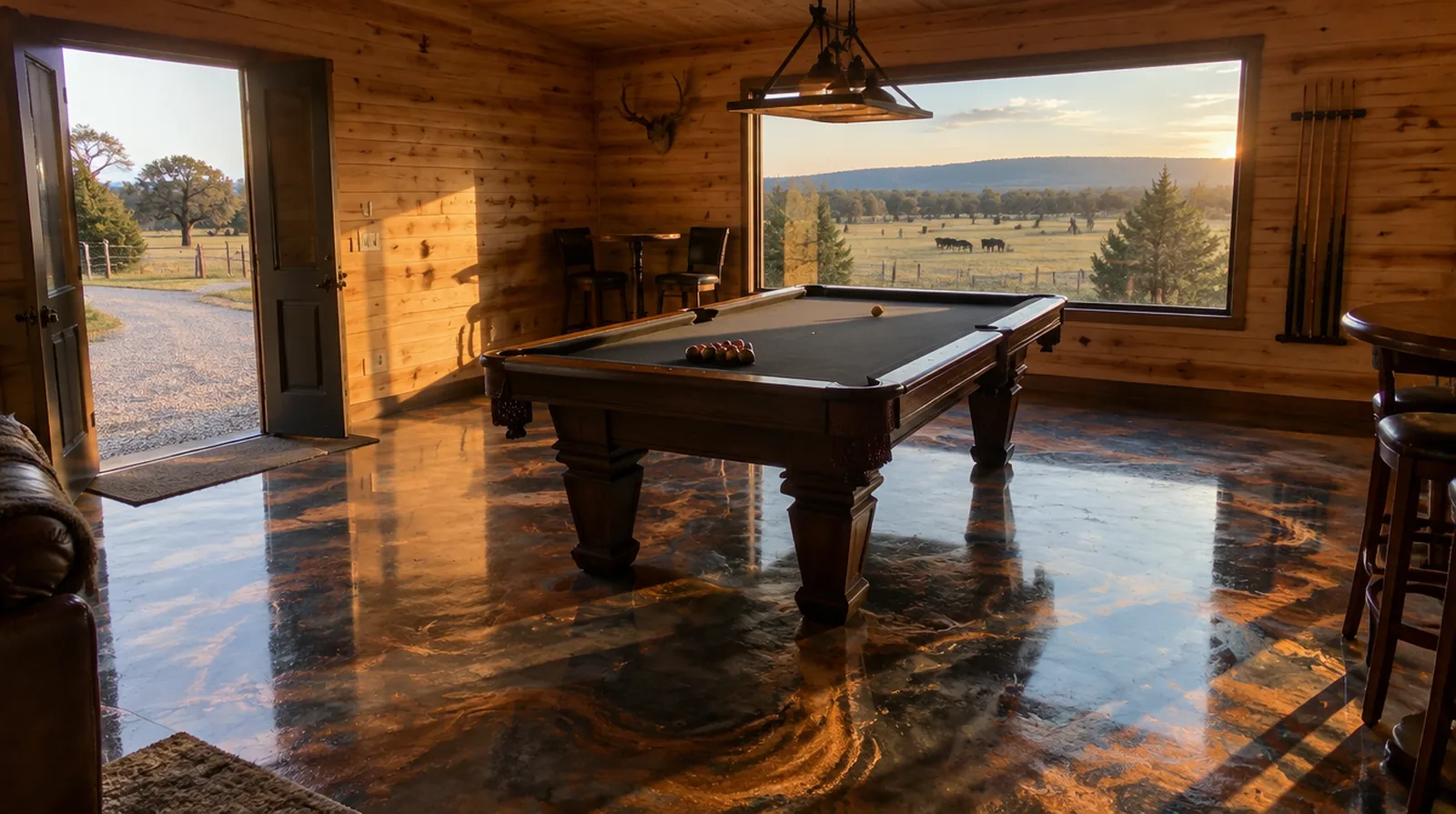
Some of the most fun projects we do in Pocola are not garages at all. Families turn a back room, an old den or a finished shop space into a game room, and the concrete floor becomes a showpiece. In the photo, copper and charcoal pigments swirl under a glossy coat, next to knotty pine walls and a pool table. The window looks out over pasture. That kind of warm color scheme fits the country homes around here better than the cool blues and silvers people often see online.
Preparing a slab that used to have carpet
Back rooms and dens usually have old carpet pad glue, tack strip holes or vinyl tile adhesive on the concrete. All of it comes off. We grind the floor to open the surface, fill the nail holes and cracks and then lay down a primer. Because metallic coatings are glossy and reflective, every bump and dip in the slab shows, so we take more time on prep than for a chip floor.
Living with a metallic floor
Use felt pads under chairs and pool table legs, sweep up grit regularly and wipe up spills with a damp mop. Avoid dragging heavy furniture across the floor. A gloss finish shows fine scratches over time, while a satin top coat hides them better. If you plan to use the room as a workout space or bring in a lot of foot traffic, satin is the safer pick.
Metallic questions
Can a metallic floor go in a garage? It can, but a garage gets scratched by grit and dropped tools. Most people prefer a chip floor there.
Do you blend colors on site? Yes. We mix pigments on the day and can test a small board first.
Ask about a metallic floor
Call (918) 303-0129.