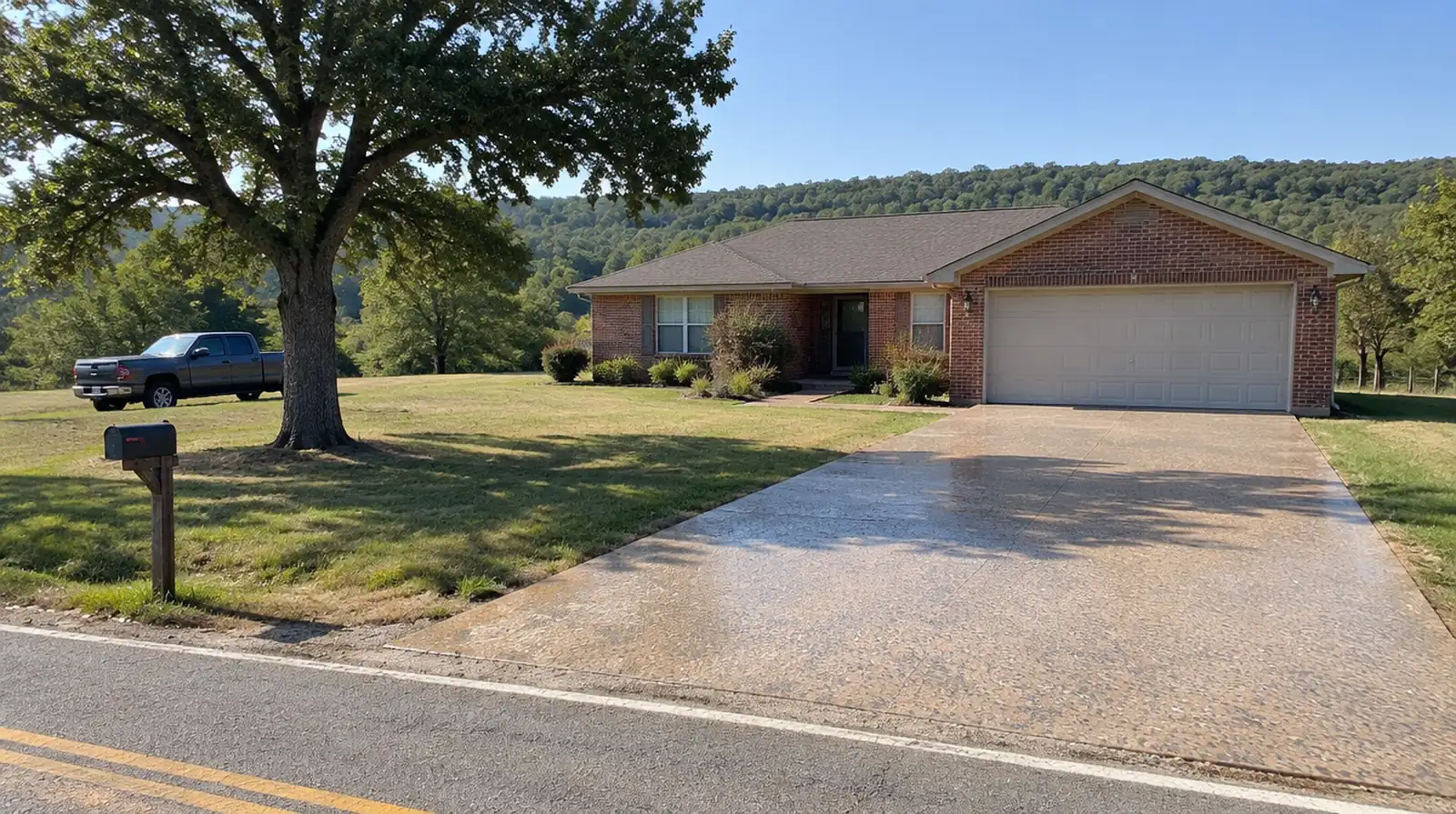
Built for country lots and town streets
Pocola sits in the northeast corner of LeFlore County, right on the Oklahoma line, with a mix of town neighborhoods and larger lots out toward the hills. Many homes are brick ranches from the 1970s through the 1990s, and newer builds and manufactured homes on acreage are common too. A lot of properties have more than a standard driveway: a concrete pad for an RV, an apron in front of a metal shop, or a carport slab where the work truck lives. All of that concrete takes abuse, and a coating protects it.
What a coating does for you
- Stops stains from oil, transmission fluid, rust and red mud from soaking into bare concrete.
- Adds traction. We broadcast a fine grit in the topcoat so the surface grips in rain or a light glaze of ice.
- Resists sun. We use polyaspartic and polyurethane topcoats that do not yellow outdoors, unlike basic garage epoxy.
- Cleans easy. A hose and a push broom take care of most mud and dust.
- Looks finished. Solid colors or flake blends turn a plain gray slab into something that matches the house.
Red clay and shifting soil
Much of this part of Oklahoma has heavy clay soils that swell when wet and shrink in dry spells. That movement is behind most of the cracks we see in Pocola driveways and shop aprons. Before coating, we fill cracks with a flexible repair material and grind down raised edges where we can. A coating will not stop a slab from moving, so if sections have heaved or sunk several inches, we will tell you and recommend fixing that first.
Red clay is also a cleaning problem. It stains bare concrete orange and does not wash out well. A sealed, coated surface keeps it on top where it rinses away.
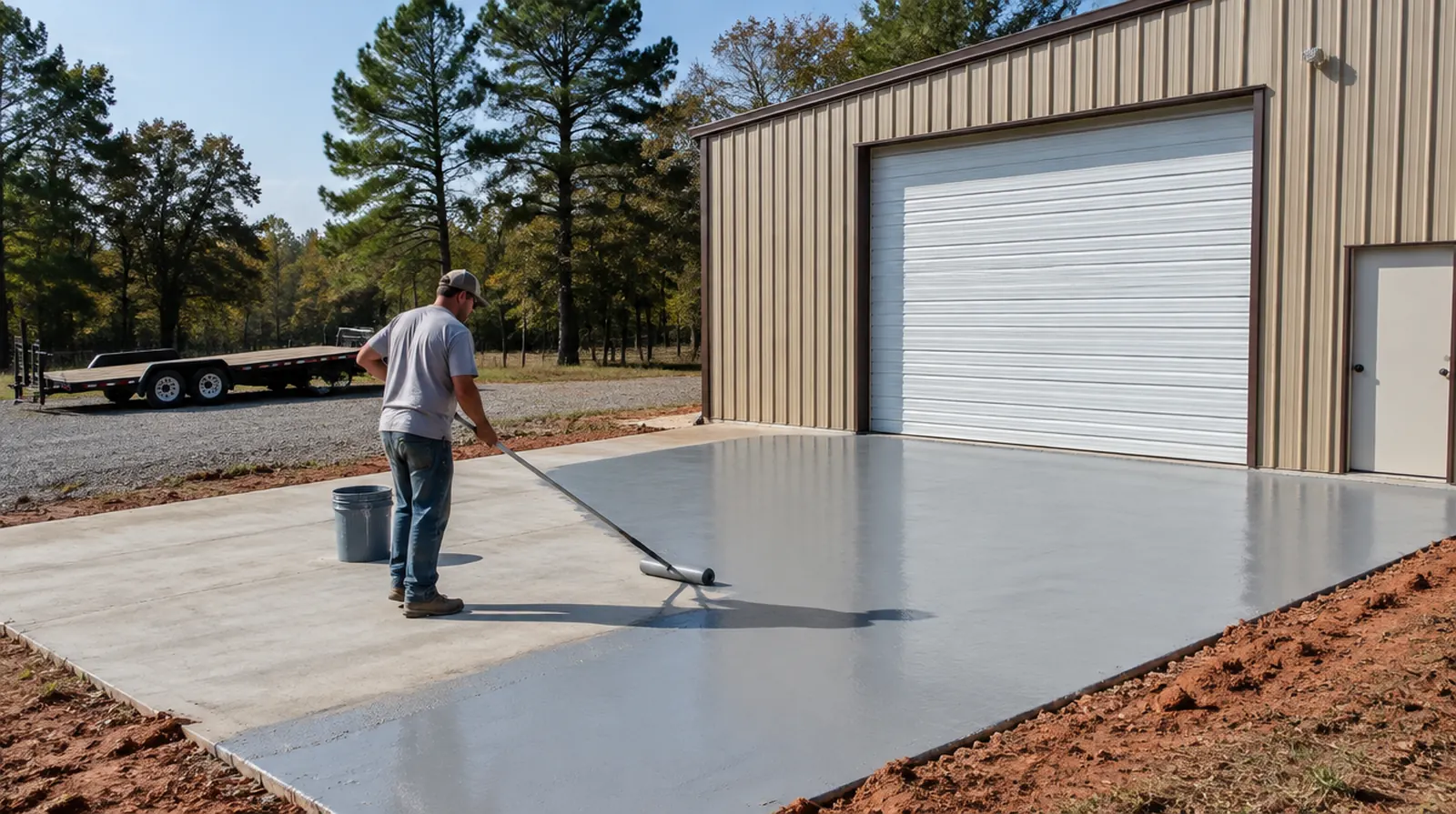
Heat, storms and ice
Summers here are long and hot, with plenty of days in the upper 90s and strong sun on south-facing slabs. Spring brings thunderstorms and the risk of hail, and most winters bring at least one round of freezing rain. The coating systems we use are chosen to handle that range. The topcoat flexes a little as the concrete heats and cools and holds up to deicers better than bare concrete. We recommend sand or calcium chloride rather than rock salt, and plastic shovels instead of metal on coated surfaces.
Our process
- Look it over. We check for moisture, old sealers and damage.
- Grind. A diamond grinder opens the surface so the coating can grip.
- Repair. Cracks, chips and pop-outs get filled.
- Base and flake. Color goes down, then flake if you want it.
- Topcoat with grit. A UV-stable clear coat with anti-slip texture.
Most driveways and aprons take one to two days. Foot traffic is fine the same evening, and vehicles can usually go back on in a day or two. We schedule around the weather because the slab needs to be dry and the forecast clear.
Colors that work here
Tan, brown and gray blends do well because they hide red dust and tire marks. Darker solid colors get hot in summer and show dust, so we usually suggest them only for covered carports. We bring samples so you can see them against your brick and roof.
Common questions
Can you coat a brand new driveway? Yes, once the concrete has cured, usually about 28 days after the pour. Coating early keeps the first oil spots and red mud from ever soaking in.
Will it be slick? Not with the grit we add. Without it, any smooth coating can be slippery when wet, which is why we never skip that step on outdoor jobs.
How long does it last? With good prep and normal use, a coated driveway keeps its looks for many years. The topcoat is the wear layer, and recoating it is far cheaper than starting over.
Pair it with the garage
Many customers coat the driveway and garage at the same time for a matching look. See our garage floor epoxy page for the inside. If you only need protection without color, concrete sealing is a lower-cost option. We also coat driveways in Spiro, Panama, Cameron and Arkoma.
Get a driveway quote
Call (918) 303-0129 and we will come look at your driveway and give you a written price.